
Why Constellations Matter – And Why You Should Care
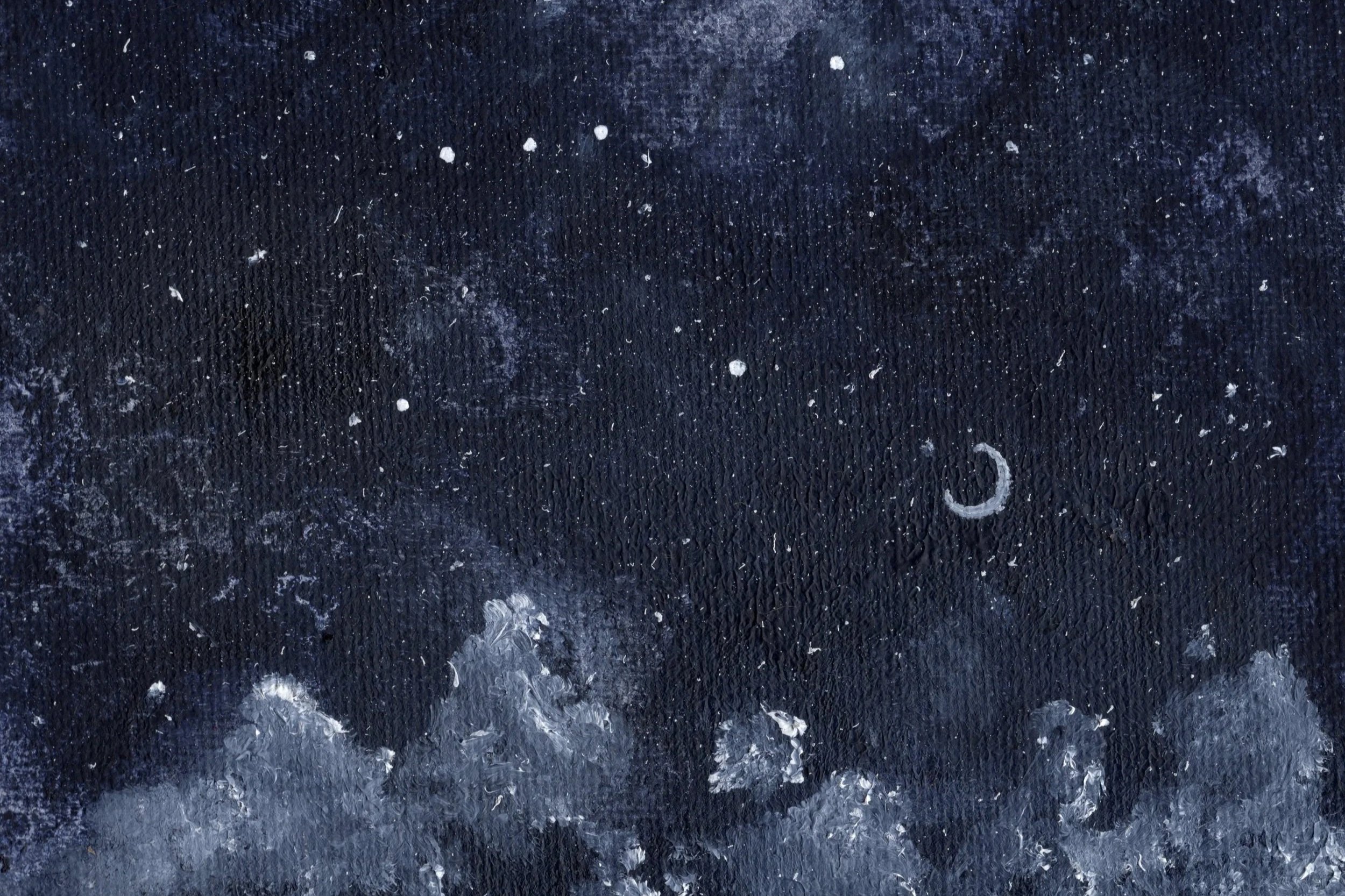
In a world where there is more to read, watch, and absorb than any of us will ever be able to process in our lifetime, why should you spend time learning to identify a smattering of stars in the sky? Why should an old pattern drawn between barely-there points of light above us mean anything to a busy person with a mortgage, a long to-do list and a phone that never seems to stop demanding attention?
These are all fair questions. And if you’ll allow me to steal away a few precious minutes of your day, I’d like to answer them.
The sky is the only history book everyone has always had access to
Today, we exist in a world that is full of easily accessible information. But before AI and Google, before printing presses and libraries and books, all humanity had was the sky.
Every culture in human history has looked up and carved meaning into what they saw. The Ancient Greeks mapped their heroes and monsters into the stars. The Babylonians used that same sky to build the earliest known astronomical records. Aboriginal Australians developed one of the most sophisticated astronomical traditions on Earth, passed down through oral storytelling for over 65,000 years. The Māori, the Ancient Egyptians, the Norse, the Chinese – all of them looked up at those same points of light and used them to map out their beliefs, their cultures and a way home.
They’re your connection to everyone who has ever observed the night sky
There is a particular feeling that comes with knowing what you’re looking at in the stars. When you find Orion, you are seeing exactly what a Roman soldier on watch saw two thousand years ago. You’re seeing what a medieval monk copied into the margins of an illustrated manuscript, and what a terrified sailor in the middle of stormy seas used to guide their ship back to safety. True, the stars have adjusted, but not in any real way a human would notice. The light reaching your eyes tonight is the same light that has guided, consoled, entertained and fascinated people for the entirety of recorded history.
They are ancient morals made visible
When you look at the night sky through the lens of mythology, you’re observing a living storybook of everything humans have deemed important enough to carve into the heavens. Love, betrayal, sacrifice, grief, and transformation – the stars are an insight into how a civilisation viewed the world and the forces within it. And of course, a lot of what we see today may make us uncomfortable. The Ancient Greeks for example, decided to honour the winged horse Pegasus in the stars instead of the violently betrayed Medusa. But we can also surmise they valued what we think of today as ‘old-fashioned romance’ by their honouring of Andromeda, a princess destined to be sacrificed to a great sea monster before being valiantly rescued by the hero Perseus. These stories are flawed, they are familiar, but most importantly they are human.
They are a way to help you feel more present
You don’t need an expensive telescope and an observatory to practice astronomy. Simply knowing that a particular bright star in the south-west is actually named Sirius, the dog star, part of Canis Major, worshipped by Ancient Egyptians as a marker for the beginning of spring and the annual flooding of the Nile – that can instantly change how you walk to your car on a clear night after a dinner with friends.
In the technical age we live in, mindfulness and being present is more important than ever. For me, there is nothing more grounding than taking a moment to spot the Taurus constellation, Orion and the Plough.
You might already know more than you think
Most of us encounter constellations through our star signs. In astrology, our sun sign is usually the first constellation name we learn, and for many that becomes part of an identity, whether it be a way to discover more about ourselves, or simply something fun to read in an online Buzzfeed article.
But your zodiac constellation has a whole history that predates even the Greeks. Taurus, for example, was used as a navigational marker by civilisations that existed thousands of years before the myth of Zeus and Europa was ever told. Scorpius was so significant to the Egyptians that its ascension was used to mark the seasons, and Aries signalled the spring equinox for the Babylonians and influenced the orientations of entire temples.
Why I decided to build a whole business around it
I have always been a lover of history, and more precisely, a deep interest in understanding the nuances of lost lives beyond a textbook. What started as a personal project painting the 12 zodiac constellations has evolved into something I never could have imagined. For me, once I started researching one or two constellations, I discovered a rabbit hole I happily threw myself down. Because this stuff isn’t just about being able to recognise a pattern in the sky, it’s about having access to the entire back catalogue of human civilisation and what was important to them, how they lived, what they loved and valued. And these stories belong to everyone – in fact, it’s why they were recorded in the first place. You don’t need a PhD in ancient history to connect with Cleopatra or Augustus. All you need to do is look up once in a while and know that you’re seeing and feeling exactly what they did.
If you’d like to keep learning about the stories behind the stars, sign up to Field Notes, The Celestial Archive newsletter for regular essays, insights and astronomy facts.
Each journal piece takes hours of research, reading and writing. I'll never put it behind a paywall – I believe these stories belong to everyone. But if you'd like to help fuel the next one, I'd be truly grateful.