
Discover Orion: The great hunter of the skies
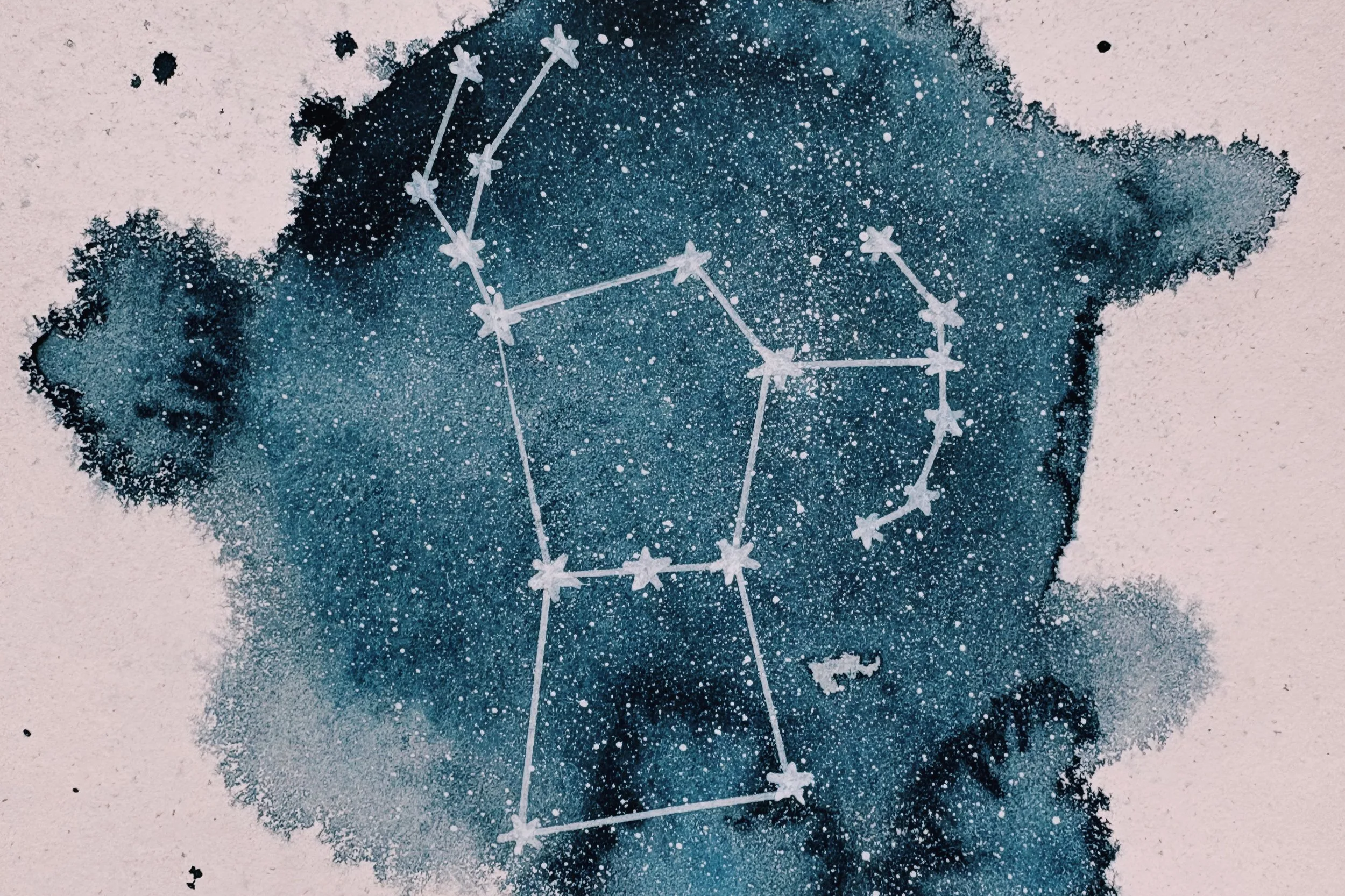
If I were inclined to make a bet, it would be that one of the first constellations you heard about was Orion. Something about that three-starred belt catches the eye – and if you follow the ancient Greek interpretation of the constellation, he would have liked that. Orion was, after all, a show-off.
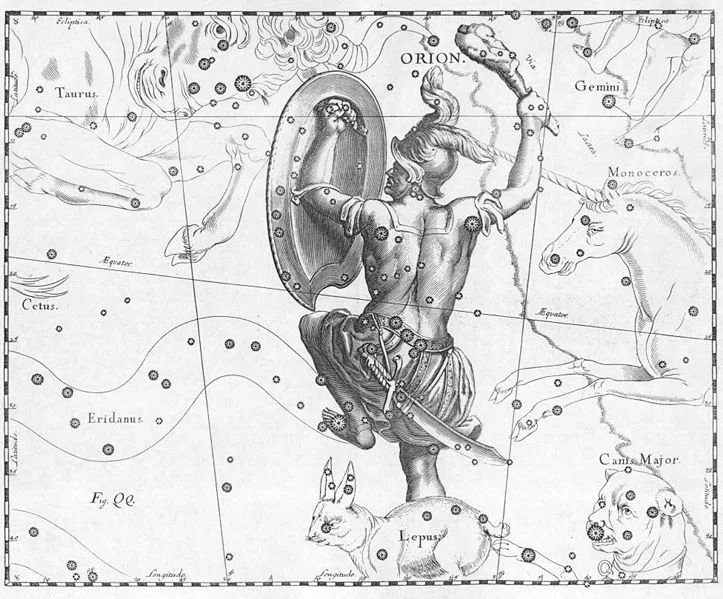
Orion - Johannes Hevelius, Prodromus Astronomia, volume III - PD-life-70
The story of Orion has many different versions, but all can agree that he was tall, devastatingly handsome and a master hunter. Some legends name him as the son of Poseidon, but other less traditional tellings claim he was born after three gods urinated on top of a buried bull hide. You can decide which version you prefer.
During his time on the island of Chios, he is said to have fallen for a woman named Merope, the king's daughter. The king vehemently disapproved of their relationship and eventually had Orion blinded. Broken-hearted and without his sight, Orion made his way to the island of Lemnos, where the smith god Hephaestus took pity on him and lent him a guide – Cedalion, who rode on the giant's shoulders and steered him east towards the rising sun. Its first rays restored Orion's sight, and he later travelled to Crete to hunt alongside Artemis, the goddess of the hunt herself, returning to his heroics for many years.
Accounts of his death vary, with some legends claiming he was killed by Artemis after attempting to rape her, others say it was down to the god Apollo's jealousy over Artemis' love of Orion. In another, he angered Gaia, the goddess of the Earth, so much by bragging about how incredible his hunting skills were that she sent a giant scorpion after him. After his death, Orion was placed among the stars alongside his loyal hunting dogs, Canis Minor and Canis Major.
Orion sits directly on the celestial equator, which makes it one of the few constellations visible from almost everywhere on Earth. From the UK, it is best viewed between November and February. And if you look to the opposite side of the sky, you will find Gaia's scorpion there too – the constellation Scorpius, placed deliberately far from the hunter. As Scorpius rises, Orion sets. Every night, all these centuries later, he is still running.
Interested in more tales from the night sky? Sign up for The Celestial Print Club – a new monthly snail mail subscription.
Each journal piece takes hours of research, reading and writing. I'll never put it behind a paywall – these stories belong to everyone. But if you'd like to help fuel the next one, I'd be truly grateful.